The Revolving Door.
“How’s life bud?” a gravel crunching voice enquires. “Still serving it” was my droll response. I get a wry smile from the odd looking dude as he makes his way down the landing. “You?” I call after him. “Every day above ground is a good day my friend” he shouts back while flashing that all too familiar lob sided manic grin of his. I watch his progress as he bounces down the four flights of stairs heading towards the servery to grab a child sized carton of milk and a pre packed bag of cereal. Both of which will appear even smaller in the twin shovels that pass for his hands. I chuckle to myself as I watch him playfully swing one of those huge mitts into the crotch of a passing con. Even from this distance I can hear the breath expunged alongside the accompanying groan escaping is lungs. “Fucks sake Walter, that really hurt”. “Pain lets you know you’re alive boy” Walter retorts whilst booming out a laugh that sounds more like bricks bouncing around a stumble dryer. I shake my head at the nature of jail house humour and wonder, not for the first time, will I ever see the streets again. Is this really to be my life, this warehouse of pain and frustration, this bedlam. Aye, bedlam, never has a word felt more appropriate or descriptive. Originating from the name of Bedlam lunatic asylum in London only in this case the lunatics have most certainly taken over the asylum. As if to highlight my train of thought an alarm suddenly screams into life with the accompanying radios emitting an all too familiar squawk of ‘Code Blue C wing, Code Blue C wing”. It’s not yet 9am and somebody’s already pressed the alarm bell to denote a man down. Code blue indicates respiratory issues, unresponsive, it could very well be a heart attack but most of us would wager our parole on it being another spice attack. There’s not much of a hullaballoo, staff make their way purposefully but unhurriedly to the cell in question with healthcare bringing up the rear, one lass carrying a pack on her back so big she reminded me of a Sherpa embarking on a climb up Everest. Despite the emergency call we’re not locked away; these incidents are so common these days that we all tend to just carry on as normal. Normal…now there’s a concept, spice attacks are so familiar that humour has now found its way into modern parlance by renaming the regular attendance of the ambulance crew as the Mambulance. Mamba is a slang term for Spice, a type of MPS. The man in question is summarily bundled into a wheelchair and rolled off for his third visit to the outside hospital in as many weeks. Jail is indeed a very surreal place these days. For those of you whose imagination is moulded by the archetypal loveable rogue Normal Stanley Fletcher doing his porridge in Slade prison we are a million miles away from the reality of the 21st century British jail. Even the traditional porridge for breakfast from which we get the slang term for doing a sentence is but a distant memory. Most modern day inmates are a collection of narcotic addicts and or dealers. The statistics are overwhelmingly saddening. The likes of Walter and those of his ilk is not much more than an echo of the past. A giant ogre of a man who’s demeanour if for the most part affable and relaxed though I have no doubt he can be a handful if he so chooses. I once heard said of him ‘he’s an old school gent is Walter with impeccable manners, he’ll always shake your hand before he knocks you out’. Regardless of the intended humour involved there’s certainly more than a little truth in what the speaker was alluding to. These days the only handshaking you’d be liable to witness is that of somebody experiencing cold turkey. I wonder just what it is that my words are eliciting from you right now. Perhaps it appears I’m holding a torch for the days of yesteryear, if so, that’s definitely not my intention. Prison has always been a hostile environment, by its very nature it is miserable place containing the retched tortured souls of those sentenced to punishment for their crimes. Every man, woman and child who’s incarcerated has been accused or convicted of a crime but its the nature of the crimes committed by the majority of inmates these days which concerns me or to be more precise the reason for those crimes. Drug addition! Narcotics are perhaps one of the leading financial industries throughout the modern world, generating billions in annual revenue. For millennia human beings have utilised the flora of this planet to get high in one way or another. There’s no reason to ask why, it simply just feels good and as we are creatures who are hard-wired to repeat the process of that which brings us pleasure it will continue to do so. Wanting to feel happy is not a crime it’s the acts of desperation whilst entrenched in addiction that leads to the crimes. Most of those involved in the world of intervention describe addiction as an illness and although it may not be curable it can certainly be treated. So why are we not doing so? We continue to build prisons faster than any other country in Europe yet the crime rate hasn’t decreased any. After the latest proposal our government has pledged an additional 4 billion pound to increase the capacity of British prisons by another 20,000 spaces taking us over a record high of 100,000 by 2025. I don’t claim to be a businessman but even the average Joe can work out the numbers for themselves. It costs around £43,000 per year to house a prisoner, that equates to an extra 860 million each year or realistically that will be for the first year because with this approach the numbers will continue to grow as they always have. After the disturbances and rioting across the prison estate beginning with Manchester’s Strangeways prison during the 90’s, there was all kinds of outcry about the need for prison reform and to what end? What exactly have our successive governments done about it since? Well, once again the numbers speak for themselves. During that period the prison population was already at an all time high of 55,000. 30 years on we are preparing to for almost double that number. Why are we continuing to pour money into a broken model. There’s an endless amount of experts advising the need for a change of direction in addressing the route cause of today’s recidivism. You only have to read Dame Carol Blacks 2021 independent review of drugs, see the stats and what’s needed in way of response. I continuously ask why the government is reluctant to do so. Is it because each political party loves to spout their rhetoric about how they will be tough on crime, do the hard work, get down and dirty in the trenches, break a sweat and sort this mess out. Locking men, women and children up does not equate to hard graft or finding solutions in fact its the easiest thing to do. Brush the debris under the carpet, hide the mountains of unwanted crap in the closet and pretend there’s no problem in our perfect little homes. Never the less, there is a problem, surely you would imagine our so called educated leaders would want to do the best possible job they could to fix a broken system. Maybe its more about the prisons and justice systems being a source of revenue. In the 90’s we had our first trace of privatisation entering the world of the British penal system. In the United States their correctional facilities have been involved in the private sector since the 70’s and is said to be a multi billion dollar industry today. Perhaps I’m not too far wide of the mark with that guess. Whatever the underlining reason for continuing this farcical approach to law and order and our drug pandemic its clearly not working and as our current political party is so fond of doing U turns at the drop of a hat I suggest somebody might want to look at the way the Norwegians have employed a complete 360 in their approach to a broken prison system. Compare the statistics and take a leaf out of that particular book. Since the 90’s Norway’s prison system has evolved into spaces that represent comfort, healing and inclusivity. Changing its approach and attitudes towards prisoners Norway is moulding high functioning members of society, in return, former prisoners are gaining the necessary skills in order to contribute to Norway’s economy. As of 2014 Norway’s incarceration rate was at only 75 per 100,000 and since they developed their new prison system in the 90’s the recidivism rate has decreased from 60-70% to only 20% in recent years. By looking at restorative justice rather than focus in on the punishment and mistreatment of its prisoners Norway has the primary goal of reintegrating its prisoners as stable contributors to communities. There’s a quote I read recently by Brie Williams MD ‘Everyone in Norway will tell you: people go to court to be punished; they go to prison to become better neighbours’. If only that was true of our jails and the many others across the globe. I’m a serving prisoner who’s spent the vast majority of his life incarcerated. Believe me when I tell you ours is a failing system. Warehousing and brutalising those souls who may well already be damaged and in need of humane treatment and assistance in order that one day they may indeed make better neighbours. SDS
Journal of Prisoners on prisons

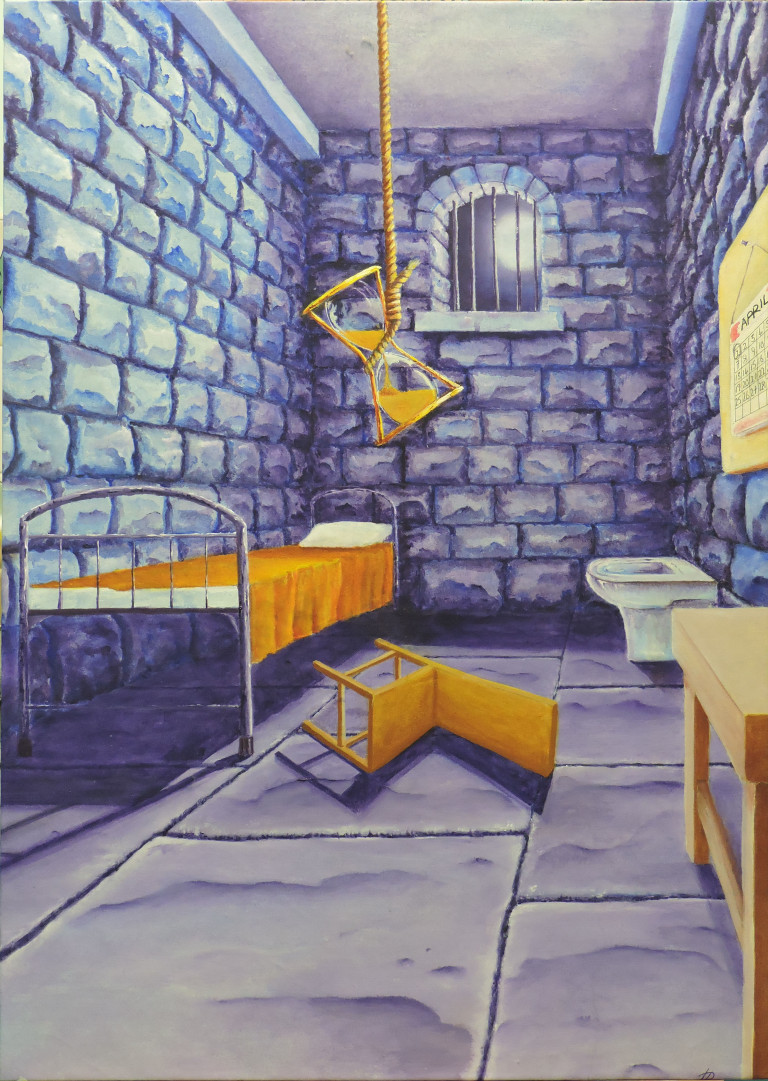
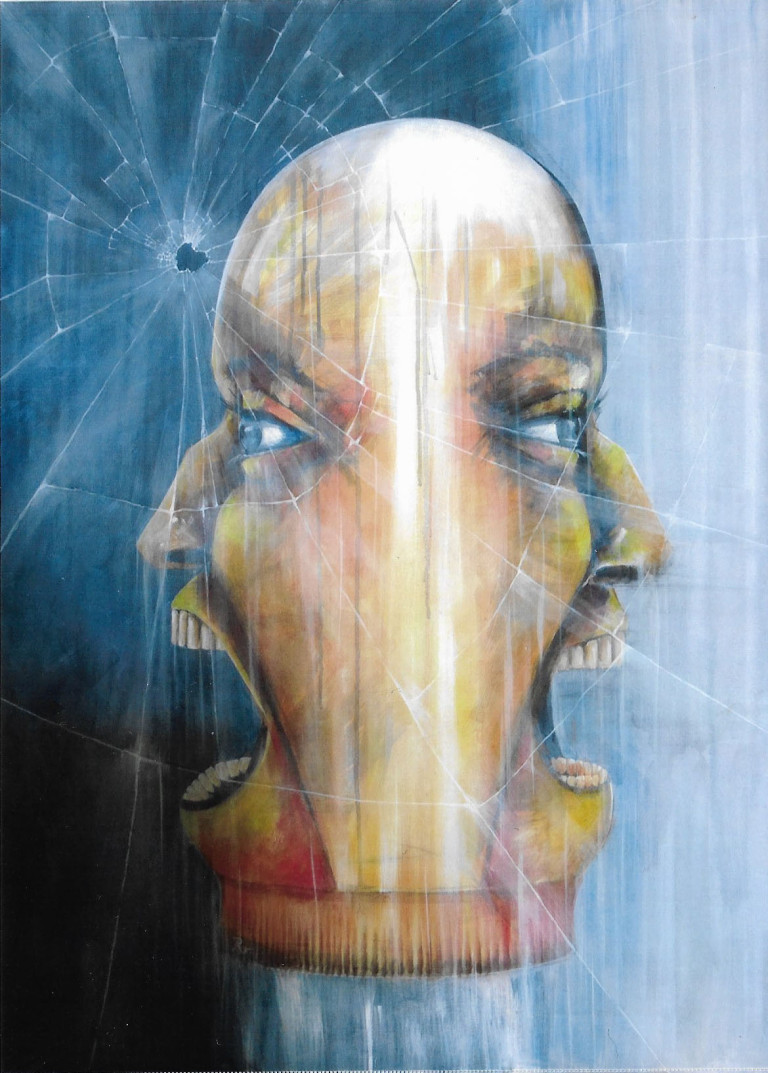
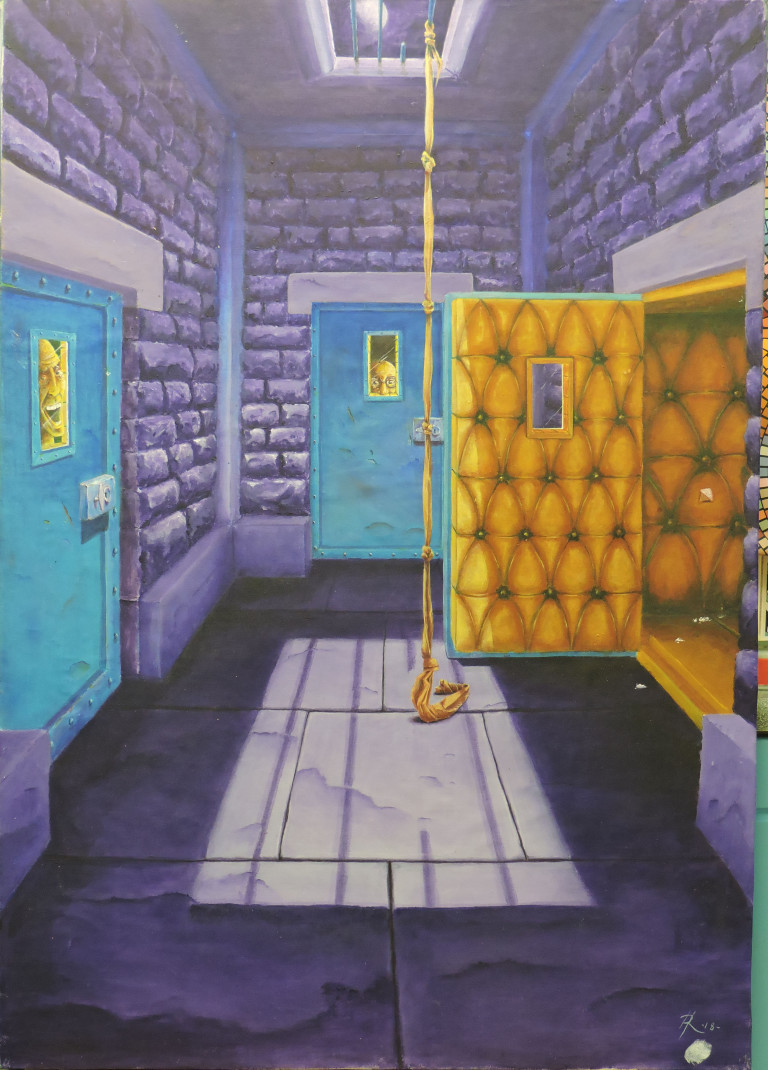
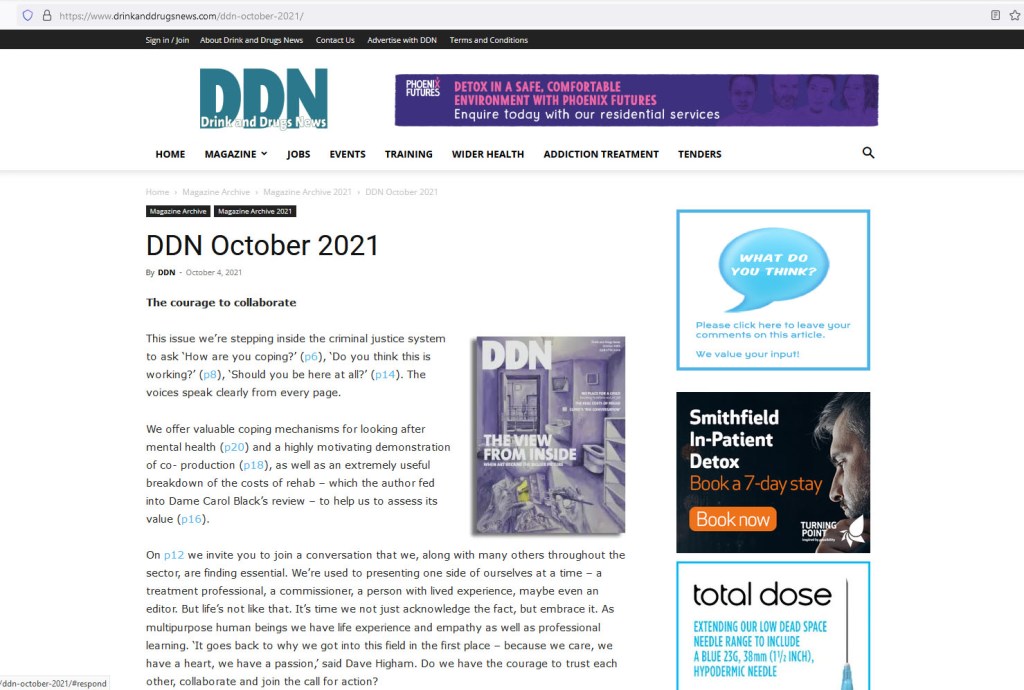
Volume 30, Number 1 (2022) is a general issue of the Journal of Prisoners on Prisons. The collection features contributions on various issues, including life sentences, use of force, solitary confinement, as well as barriers to community re-entry and the development of Convict Criminology. The Prisoners’ Struggles section also explores the impact of COVID-19 on imprisoned people. The cover art was made by an anonymous imprisoned artist who founded Steel Door Studios. The issue was mailed to contributors and subscribers on 4 April 2022.
DDN – Drink and Drug News
At Odds…
Drugs help to numb the pain of trauma – and of incarceration – but art can be an
integral part of recovery, SteelDoorStudios (a serving prisoner) explains
Am I conflicted? Damn right I am. I’ve led a life of strife and turmoil, always feeling like an oddball. Even in my earliest of memories as a toddler I recall feeling like the odd one out – for such a tiny word, ‘odd’ can evoke vast amounts of connotations. I’ve no doubt that most of you at some time or other will have experienced your own concepts of odd – where did it take you, I wonder? For me and many of those of my
ilk, the odd continued down the surreal world of narcotic abuse, trying desperately to find something to fill that void in my soul whilst enduring the accompanying feeling of isolation and disconnection, which was just as painful as any of the physical beatings I’d experienced. I never set out to be an addict – it was a natural progression for me. A child full of pain and angst looking for a salve. That salvation would eventually be found in heroin. It may well seem a bizarre statement to refer to heroin as my salvation, yet that is what it is. For without the unique properties that are very specific to heroin I believe I never would have got beyond my formative years. There is something about that particular drug that no other narcotic offers – it’s like injecting apathy. Being completely able to function without having to feel anything is like a dream come true for those of us who have experienced deep childhood trauma.
Yes, we all know it’s a double-edged sword. Just like any drug it takes its pound of flesh and the piper has to be paid, but today I have reached my mid-fifties and being a heroin addict was just part of my journey. I did what I did to survive, I’ve spent over four decades in institutions of one kind or another, and now when I look around me, all I see is despair reflected in the eyes others trapped in that vicious cycle of substance abuse.
Our prisons have become warehouses, revenue-generating machines processing the
lost souls of addicts on a conveyor belt destined towards a revolving door. For those of you whose images of prison are shaped by the archetypal lovable rogue Norman Stanley Fletcher, you wouldn’t recognise the 21st century prison service. Between April 2018 and March 2019, the prison population was just shy of 80,000, and of that number 53,193 were in treatment – and that’s excluding those who claim not to be using. Today we are broaching the 100,000 mark
This is my backyard, I live here and I can testify it’s an epidemic, and what are our leaders doing about it? What’s their solution? Build more jails! Robert Buckland, the recently demoted justice secretary, announced that £4bn would be ploughed into the criminal justice system with the go-ahead for 18,000 new prison spaces. I’m sure that each and every one of you has your own opinion on such a contentious subject
and I can only offer mine – however it’s people who live here who truly get to see what goes on behind closed doors.
So let me tell you a little of where I am at today. I’m currently residing in one of only a handful of therapeutic prisons in our country. This particular environment differs in many ways from the rest of the British penal system, the most prominent of which is that there is an actual desire to help men address their issues. Not just the criminal values they might hold, or the offending behaviours they may present, but
assisting them to delve into their whole history and supporting them throughout the whole sodding mess.
I don’t have the space to write anything in depth on the subject, but it’s safe to say I
feel like one of the lucky ones to have been afforded the opportunity of looking at my life and knowing I don’t have to be just a faceless number, warehoused in some dilapidated, festering, Victorian cesspit of a jail and waitingfor the day the authorities
tell us they’ve had their pound of flesh and we can now go free. Free from what, I ask? The steel doors that I’ve spent the vast majority of my life behind? This place offers me the chance to achieve real freedom. To find the peace and serenity I’ve longed for throughout my miserable existence.
As I said earlier, this establishment differs greatly from mainstream jails. I’ve always had an interest in art, although I came to painting very late on in life and I often found myself with pencil or pen in hand during my incarcerated years. Sadly, however, the focus on the therapeutic value of art in prison has diminished significantly over the past couple of decades, and these days you’d be lucky to find a canvas and a brush available.
Not so here – we’re funded by an outside trust that not only encourages us to express what is prominent in our lives but also offers assistance via an artist in residence. We also have a forward-thinking governor who championed my desire to create an anonymous website accompanied by a monthly blog in order to share my thoughts and images. Art has become an integral part of my journey of recovery. It offers solace in times of turmoil and affords me the opportunity to reflect upon who I am, where I’ve been, and where I’m heading. I’m often asked, ‘why don’t you paint something happy?’ Yet despite the morose nature of most of my work it actually does make me happy. I ask questions of myself in those paintings that I wouldn’t have previously dared to, let alone understood. With each new piece I can spend days, weeks and months contemplating my life and gain insight from even the tiniest nuance. I’m getting to know me and learning to find comfort in my vulnerabilities as well as my strengths. My whole life has seen me raging at the world and pointing the finger of
blame. The painting You’re Looking at the Problem is a true account of one individual’s intervention in my life – he had placed a scrap of paper under my mirror one day with those words scrawled upon it. Today I see those words clearly and I am the problem. I’m also the solution.
The second of the paintings I’ve chosen to share with you is Anonymity. As COVID struck, our establishment along with everywhere else went into full lockdown. We returned to 23 hours of isolation which was exactly how it used to be for me in the early years of my sentence. We had become the forgotten once again, and even when
restrictions began to lift ours were only alleviated by an extra hour. For 16 months we’ve endured 22 hours of bang up. It was one of the most testing times of my life, as I had to fight my old behavioural demons on a daily basis. I had some failures and some success, but I had my art work to keep me company throughout. The final piece, At Odds, is my favourite painting of the last couple of years. A decade of intense bitterness at my plight had seen me become a twisted soul where nothing ever made
sense and I only felt pain. I now find myself in an environment of intense scrutiny where even the minutia of my behaviour found its way under the microscope of analysis and often left me at odds.
As the years go by, I find myself feeling more at ease with my paintings and sharing my truth. The truth really does set you free and to that end I will wish you all good fortune on your own journey.
For my wonderful partner, I would like to thank you for all your help and endless support.
To see more of the artwork or read the monthly blog visit steeldoorstudios.com,
Twitter @SteelDoorStudi1 or Instagram @
steeldoorstudios
Prison Pheonix trust

Meditation in Action
An artist inside, Steel Door Studios, was finding the
solitary existence of extended pandemic lockdown an
enormous struggle. He’s found his meditative approach to
art a way to be with his thoughts, feelings, and emotions.
“How lucky I am to have my own art studio (a 7´ x 7´
prison cell) and a large amount of time to just create.”
My daily routine consists of a fair degree of preparation.
You may think it is just a case of simply picking up
a paintbrush or finding a spare half hour to fit in a spot of
creativity. Though that may well be the case for some folk,
for me it’s a methodical approach in which I spend at least
30 minutes just ‘pencil sharpening’. A term I use in the
metaphorical sense as it’s the time when I begin to centre
myself for the day’s work. Laying out my equipment, setting
up the easel, freshening the water pot, arranging my palette,
even choosing what music will suit the piece I’m working
on. I’m quite literally organising and decluttering my mind
simultaneously. There’s also a physical routine which is part
of my structured approach. It’s not uncommon for me to spend
6-7 hours standing at the easel, so stretching out properly is
essential, especially the lower back as after standing for that
amount of time it can become very tight and compressed.
Shoulder and neck rolls are also employed as is stretching out
the hand muscles. I often do some sketching as well to get the
creativity flowing.
Being part of a bigger picture
Being an artist is very much a journey of mindfulness and so
much more than the craft. It’s a way of seeing the world and
engaging with people. It’s also about observing and connecting
with yourself. How you feel at that particular moment in time.
How my breathing affects the control of my tools. How to
recentre after an interruption or somebody disturbing you.
How to acknowledge the lovely summer breeze upon my face
without allowing my mind to drift into distraction and fantasy
about a walk on the beach. Even if the mind is in chaos at the
start of my day, I have learnt to take solace in standing before
my easel and acknowledge the serenity on offer in this space.
Dissolving into the work
Once I begin to paint, I could be in a studio anywhere in the
world, my 7´ x 7´ concrete cell and steel door no longer has
any relevance. I’m just a guy on a specific day of a specific
year creating a little bubble of tranquility in which to share
a little of my life’s journey. Throughout the whole day
mindfulness and single-minded concentration continues to
play its part. If I have a specific thought that’s distracting
me, I will acknowledge it and take a moment to scribble
it down without pondering over any merit it may contain,
that’s for later. This enables me to seamlessly reapply my
focus without forgetting what might be an idea of note, or
maybe even a new piece of work. I learnt a long time back
about the futility of attempting to stop my thoughts, it’s an
unwinnable exercise.
Listening to my body
Finally, I remain aware of my own body speaking to me. If I
feel thirst I drink, hunger I eat. If my back begins to ache, I
soften my knees until once again the ache returns with more
demands and I accept my aging body is asking me to call it a
day. Although my approach to art and creativity might not be
yoga or meditation in the traditional sense it does have similar
aspects and for me it offers a wonderful way to find peace and
tranquillity in what is, in essence, a pretty hostile environment.
Steel Door Studios shares a meditative approach to art
“One who offers his actions to the divine,
having let go of attachment, is not affected
by misfortune, as water doesn’t cling to a
lotus leaf”.
Bhagavad Gita, ancient yogic text
Prison insider
Published on April 14, 2021 Testimonial
No longer the product of my crime (but of my creativity)
Finding creativity in the brutality and apathy of the prison system.
The artist behind Steeldoorstudios is from Manchester (United Kingdom) and has been incarcerated for a large part of his life. He is approaching his 54th birthday. He is incarcerated near Oxford in the South of England for a life sentence. “Realistically, I stand a good chance of being released within the next couple of years though, of course, this is dependent on the parole process and the amount of progress I’ve made”, he says. He describes art as his one constant companion during his long years of confinement.
He has accepted to share with us and comment about two of his paintings. His words expose the challenges of the creative process in prison.
All paintings are copyright Steeldoorstudios, 2020.
Being encased within steel and mortar shouldn’t and mustn’t be allowed to alter the fundamental essence of a human being. I, like many others amid the brutality and apathy of the prison system, have either retained or found the ability to be creative.
My initial experience of art came by way of the surrealist artist Salvador Dalí. Aged just 11, I was indoctrinated into the world of institutional life via a lengthy stint in an approved school1. That old Victorian convent was to be my reluctant place of abode till I was 16. With its high ceilings and gloomy long passageways, it was a frighteningly imposing building. The kind of edifice designed to oppress and assert its will upon you and quite capable of leaving a person feeling both inferior and chastised simultaneously. It was here that I first saw the Salvador Dalí painting titled Swans Reflecting Elephants, which evoked two separate feelings, fascination and disquiet.
Even though my interest in art stemmed from an early age, I came to paint relatively late on in life. Being colour blind, I believed it to be a hindrance for a painter so I steered clear until my late 30’s. During these long years of confinement, art has been my one constant companion. Without its loyalty, I would hold a damn sight more of the pain and fear that shaped my life from a young age. Perhaps the most prominent factor in a person’s removal from society is finding that ability to adjust to the isolation.
Right at the outset, as that steel door slams shut on the first of many nights of incarceration, you find yourself alone. No family, no friends, husbands, wives or children. Completely devoid of loved ones, the weight of that isolation is truly felt.
I vividly remember the next morning, as the dawn of that new day illuminated the festering, dilapidated Victorian cell that was to be my new abode for however many years to come. Tuning into the sounds of the disembodied men beyond the thick cold walls: stirring, coughs, snorts and groans carrying along the landings. A low rumble as prison guards mount the steel stairs in unison at either end of the wing. My mind’s eye envisions a lumbering beast inhaling its first breath of fetid air. I can almost hear it groan in resignation. “The key is acceptance” a voice whispers in my minds’ ear. Taking my own deep breath, I stand up and stare at the securely locked heavy steel door in front of me.
My freedom is gone. I no longer have the autonomy to do something as simple as open my own door!
From here on in, I’m told when to eat, to wash, to exercise, even when to speak. I’m told what is required of me and left with no illusions of what the consequences will be for any infringement of the rules. Reduced to nothing more than a mere number accompanied only by a profound lack of voice.Being encased within steel and mortar shouldn’t and mustn’t be allowed to alter the fundamental essence of a human being. I, like many others amid the brutality and apathy of the prison system, have either retained or found the ability to be creative.
Some write prose or poetry, others paint, draw or play music. Whatever particular bent they have, it’s the one thing humans have in common: we are all creatives, by our very nature.
- Author’s note: Back then, youngsters aged between 11 and 18 could be placed by Court order in approved school. They were the equivalent of a reformatory. Today one of the terms used is children’s home, though that terminology evokes a certain sense of wellbeing and nurture, neither of which was evident in my years incarcerated there.
See England & Wales country profile for the current organisation of the prison system for minors. ↩
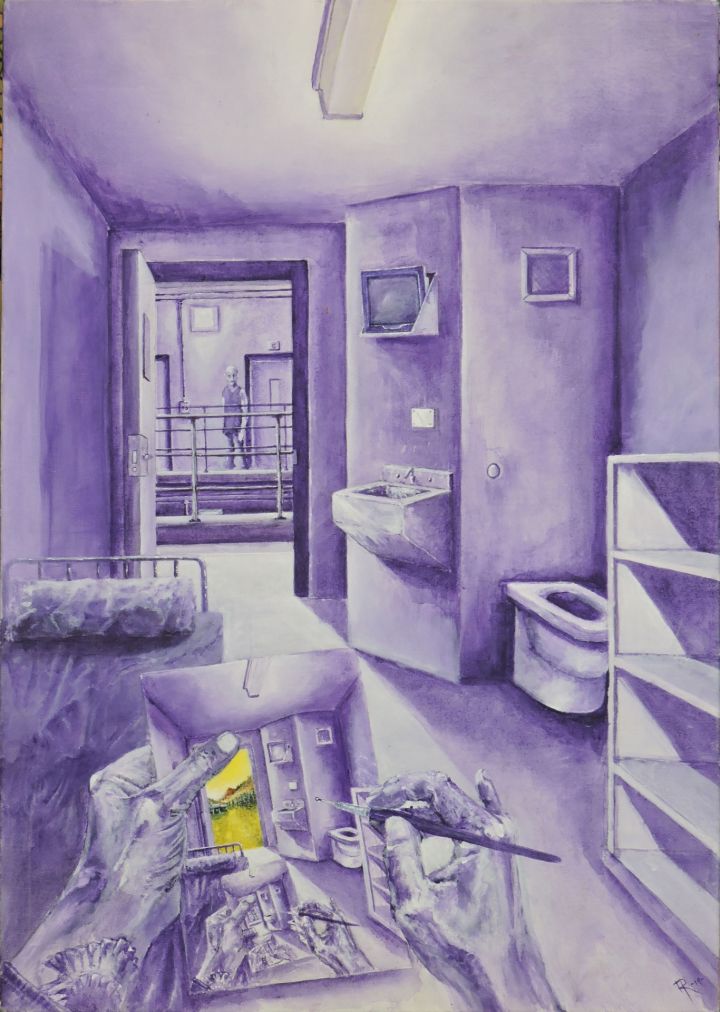
I’ve drawn endless images of myself drawing myself, it speaks highly of the monotony endured within prison. Cell in Cell (Green Dreams) illustrates my immediate environment but also the fantasy of my eventual freedom.
Paint what you know?
Intermittently, I’m trying new approaches and techniques amid the “darker” pieces but it’s very difficult finding new inspiration in such isolation. My lovely partner ensures I receive a couple of monthly art mags which are full of useful and interesting articles.
Inevitably, I continue to return to the same themes though. I have to exercise my imagination in doing so. Is that a bad thing? My sterile, often dark and brutal world is a subject I’m all-too familiar with.
Paint what you know! No clue where I picked up that saying or indeed, if it is even one. Though I do recall somebody saying something similar to me last year. His favoured painting style was landscapes. He stated he had become quite proficient and hadn’t ever considered changing until the day somebody he admired asked him the question “what does an inner city Birmingham boy know about landscapes?”. Although there’s plenty of debatable points in that argument, I get what the question evokes. It strikes the same chord with me as it did with the landscape painter. I know institutional life; I’ve been a part of it since I was a small child of 11. Although I do purposely try to stay clear of the more brutal and graphic images so as not to inflict them upon others (you the viewer), I try to “paint what I know” and offer you a little insight into my world.
I can’t speak for you, but I’m often feeling on the verge of either exploding or falling apart at the moment. Trying desperately to hold on to some semblance of sanity is compounded by being confined to a 7’x7’ concrete box for 22 hours a day.
I’ve drawn endless images of myself drawing myself, it speaks highly of the monotony endured within prison. Cell in Cell (Green Dreams) illustrates my immediate environment but also the fantasy of my eventual freedom.
I am no longer the product of my crime but of my creativity. I survived the past; I am thankful for the present and I now have a much brighter future.
Reflection in an insular world
It’s not all negative though. Having to dig so deep for those illusive reserves of resilience is an opportunity to learn more about yourself. Self-reflection has become an interesting bed fellow over these many months of lockdown. In fact, I think it’s fair to say ‘reflection’ itself appears to have become an oddly repetitive theme throughout this COVID crisis. Or maybe I’m just more aware of it because of the epidemic? Reflection has begun to wear many a different guise in my very insular world: be it reflecting on the need to give myself a good kick in the pants and drag myself off the pity pot, or the more recent completion of another self-portrait.
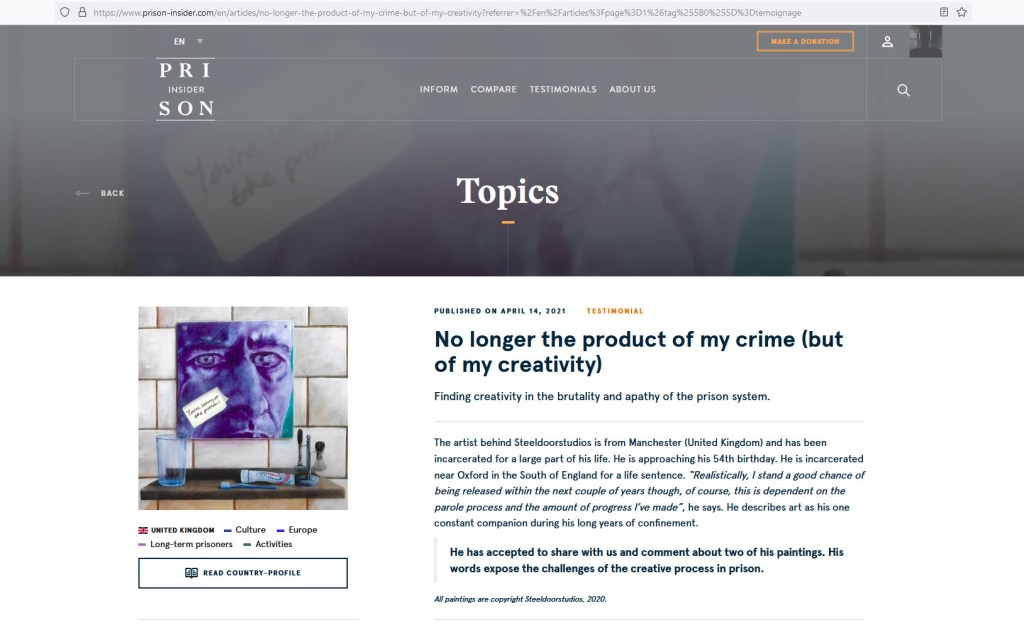
Let me share with you what had transpired whilst looking in the mirror and how my painting “You’re Looking at the Problem” came about. I had recalled an incident from around 2005. Somebody took it upon themselves to enter my cell and surreptitiously stick a hand-scrawled note under my mirror, using toothpaste as an adhesive. I have no clue as to what time he had done this, I only noticed it after bang up (lockdown). All these years later, I still recall the reflected look of confusion being mirrored back at me as I re-read the note with the smell of toothpaste assailing my nostrils. “You’re looking at the problem!” it said. Eyes flicking from the mirror to the note, I saw the anger ignite. My initial response spat itself from my lips: “F**king knob head!!”. It didn’t take much in those days for my sense of indignation to take hold. This particular incident had left me completely confused as to whether I was being criticized or complimented. So as per usual I chose the former to take umbrage with, as it was a more familiar emotion.
Sometime later and upon further reflection, I began to wonder not just what it was this guy saw in me, but also why he’d bothered doing it at all? I was acutely aware of what people thought of me back then. It was plainly evident in the looks of disdain and the usual avoidance of me. As I didn’t particularly like myself in those days either, it was understandable. That note has always stayed with me. It gave me enough food for thought to ignite a very small flicker of a flame, which eventually would combust into a burning desire to be healed.
I initially created Steeldoorstudios.com as a singular entity enabling visual communication to the outside world. However, it’s our desire that this project becomes a beneficial platform for myself and others of my ilk to find their creative voices, be able to share, connect and maybe one day return to the outside world, not as a tainted outcast but as a useful and valued member of society with something to offer.
I am no longer the product of my crime but of my creativity. I survived the past; I am thankful for the present and I now have a much brighter future.
anvp

https://www.anvp.org/steeldoorstudios-de-la-prison-vers-lailleurs
Steeldoorstudios, de la prison vers l’ailleurs
xavierdeneckerAilleurs 11 mai 2021 3 Minutes

Condamné à purger une longue peine dans une prison au sud d’Oxford, un détenu explique comment la peinture a redonné un sens à sa vie, la créativité s’opposant à la brutalité et à l’apathie de la vie carcérale.
Le site « Prison Insider » a récemment donné la parole à l’animateur du site Steeldoorstudios (les studios des portes en acier). Âgé de près de 54 ans, il a passé de nombreuses années en prison. Étant daltonien, il pensait la peinture inaccessible pour lui et n’y est venu que tardivement. Il mesure la chance d’être incarcéré dans une prison qui favorise l’expression artistique « surtout tout au long de cette pandémie où nous avons passé une quantité excessive de temps enfermés dans nos minuscules boîtes de béton. »
Comment s’adapter à l’isolement ? Telle est la question qui se pose dès le premier jour en prison. « Alors que cette porte en acier claque pour la première de nombreuses nuits d’incarcération, vous vous retrouvez seul, sans famille, sans amis, mari, épouse ou enfants. Complètement privé des êtres aimés, vous ressentez vraiment le poids de cet isolement.
Réduit à un simple nombre
« Je me souviens très bien du lendemain matin, alors que l’aube de ce nouveau jour éclairait la cellule victorienne puante et délabrée qui devait être ma nouvelle demeure pour de nombreuses années à venir. S’habituer aux bruits des hommes désincarnés de l’autre côté du mur épais et froids : agitation, toux, reniflements, gémissements tout au long de la coursive. »
« À partir de maintenant, on me dit quand manger, se laver, faire de l’exercice, même quand parler. On me dit ce qu’on exige de moi et je ne me fais pas d’illusions sur les conséquences de toute violation des règles. Réduit à rien de plus qu’un simple nombre accompagné seulement d’un profond manque de voix. »
La capacité d’être créatif
Et pourtant, dit l’artiste, « comme beaucoup d’autres, au milieu de la brutalité et de l’apathie du système carcéral, j’ai conservé ou trouvé la capacité d’être créatif. Certains écrivent de la prose ou de la poésie, d’autres peignent, dessinent ou jouent de la musique. Quel que soit le pli qu’ils prennent, c’est la seule chose que les humains ont en commun : nous sommes tous par notre nature même créatifs. »

L’art met la personne incarcérée « en mesure de partager, se connecter et peut-être un jour revenir au monde extérieur, non pas comme un paria contaminé, mais comme un membre utile et précieux de la société avec quelque chose à offrir. »
L’artiste est incarcéré dans une prison où l’art est encouragé par une fondation privée, mais a le sentiment que l’administration pénitentiaire, qui dans les années 1990 considérait l’art créatif comme un moyen « d’enrichir et d’encourager les âmes de ceux qui ont mené une vie destructrice », a perdu la passion sous le poids de la bureaucratie. Alors, on trouvait en prison des studios créatifs totalement équipés. C’est devenu une rareté aujourd’hui.
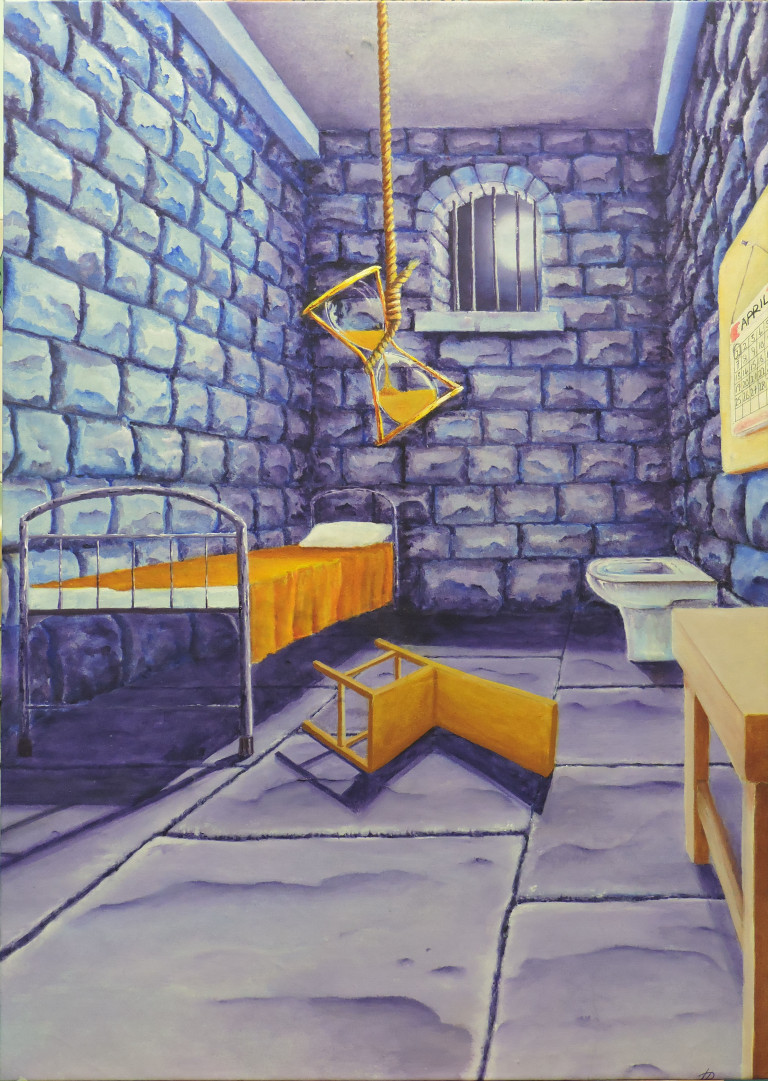
Les peintures de Steeldoorstudios parlent de la prison, du temps que l’on tue, de la folie à laquelle on tente d’échapper, des rêves verts que l’on fait dans le gris de la cellule. Elles sont fortes, puissantes, à l’image d’un homme qui a décidé de rester vivant dans un système qui pourrait l’anéantir.

Les images reproduites dans cet article l’ont été avec l’accord de l’artiste. Elles sont protégées par un copyright (2020). On peut consulter le site Internet de Steeldoorsstudios, ses pages Facebook, Twitter et Instagram.
Xavier Denecker, président de l’ANVP
Transhumances

https://www.xavierdenecker.fr/?s=steeldoorstudios
Steeldoorstudios, from prison to elsewhere
May 6, 2021 Art , Great Britain , Justice
Sentenced to serving a long sentence in a prison south of Oxford, an inmate explains how painting has given meaning to his life, with creativity opposing the brutality and apathy of prison life. The site ” Prison Insider ” recently gave the floor to the host of the site Steeldoorstudios (the studios of steel doors). Almost 54 years old, he has spent many years in prison. Being color blind, he thought painting inaccessible to him and only came to it late. He measures the chance of being incarcerated in a prison that promotes artistic expression “especially throughout this pandemic where we have spent an excessive amount of time locked in our tiny concrete boxes.” “
How to adapt to isolation? This is the question that arises from day one in prison. “As that steel door slams shut for the first of many nights of incarceration, you find yourself alone, with no family, no friends, husband, wife or children. Completely deprived of loved ones, you really feel the weight of this isolation.
Killing time
Reduced to a simple number
“I vividly remember the next morning, as the dawn of this new day lit up the stinking and dilapidated Victorian cell that was to be my new home for many years to come. Get used to the sounds of the disembodied men on the other side of the thick, cold wall: commotion, coughing, sniffling, moaning all along the passageway. “
“From now on, I’m told when to eat, wash, exercise, even when to talk. I am told what is required of me and I have no illusions about the consequences of any violation of the rules. Reduced to nothing more than a simple number accompanied only by a profound lack of voice. “
The Cracks are beginning to show
The ability to be creative
And yet, says the artist, “like many others, amid the brutality and apathy of the prison system, I have retained or found the ability to be creative. Some write prose or poetry, others paint, draw or play music. Whatever fold they take, it’s the one thing humans have in common: we are all by our very nature creative. “
Art empowers the incarcerated person “to share, connect and perhaps one day return to the outside world, not as a tainted outcast, but as a useful and valued member of society with something to offer. “
The artist is incarcerated in a prison where art is promoted by a private foundation, but feels that the prison administration, which in the 1990s viewed creative art as a means “to enrich and encourage
the souls of those who have led destructive lives, ”lost passion under the weight of bureaucracy. So there were totally equipped creative studios in prison. It has become a rarity today.
The paintings of Steeldoorstudios speak of prison, of the time we kill, of the madness we try to escape, of the green dreams we have in the gray of the cell. They are strong, powerful, like a man who decided to stay alive in a system that could destroy him.
Escape the madness
The images reproduced in this article have been made with the agreement of the artist. They are protected by copyright (2020). You can consult the Steeldoorsstudios website , its Facebook , Twitter and Instagram pages .
 Steeldoorstudios