National gallery conference
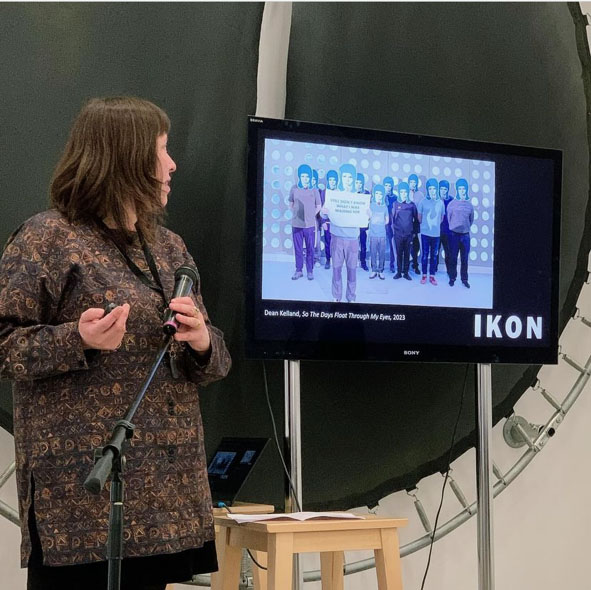
Ikon talking at the National Gallery


“I’ll move on to the work of a prisoner artist, known by the pseudonym Steel
Door Studios. Steel Door was a resident for five years and has
experienced incarceration for most of his life. As a child he was subjected to
approved schools, later spending his 18th birthday in a brutal borstal for what
we now term ‘young offenders’. Now in his mid-50s he will be released from
prison in the next two years.
Steel Door’s painting practice significantly developed during the course of his
time working with Kelland. He now aspires to be a professional
artist. His work usually comprises self-portraits and often considers
incarceration and its effects on prisoners.
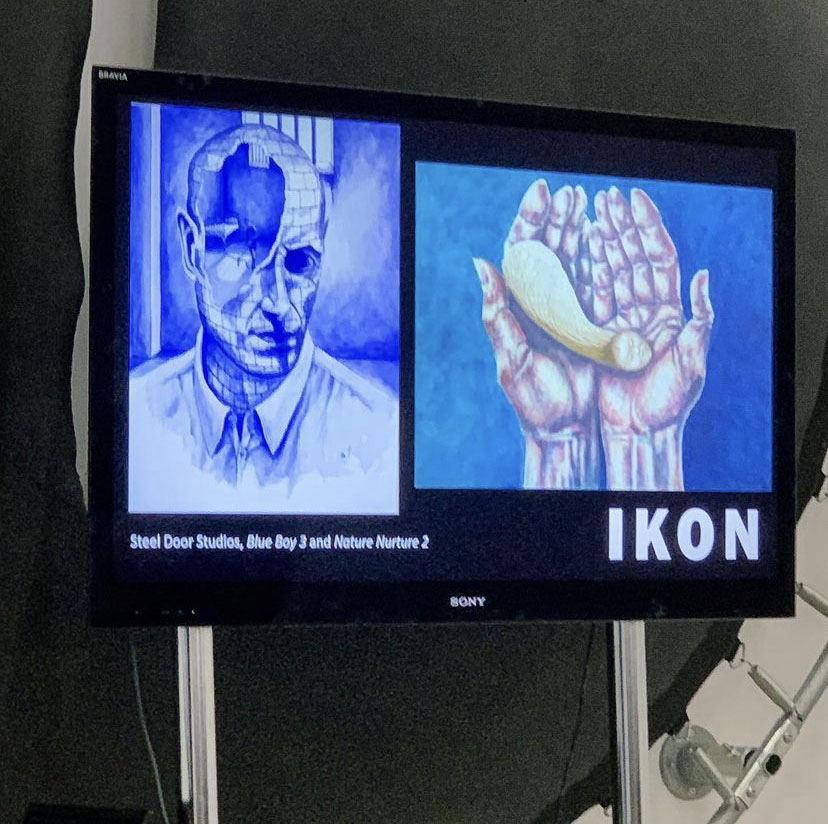
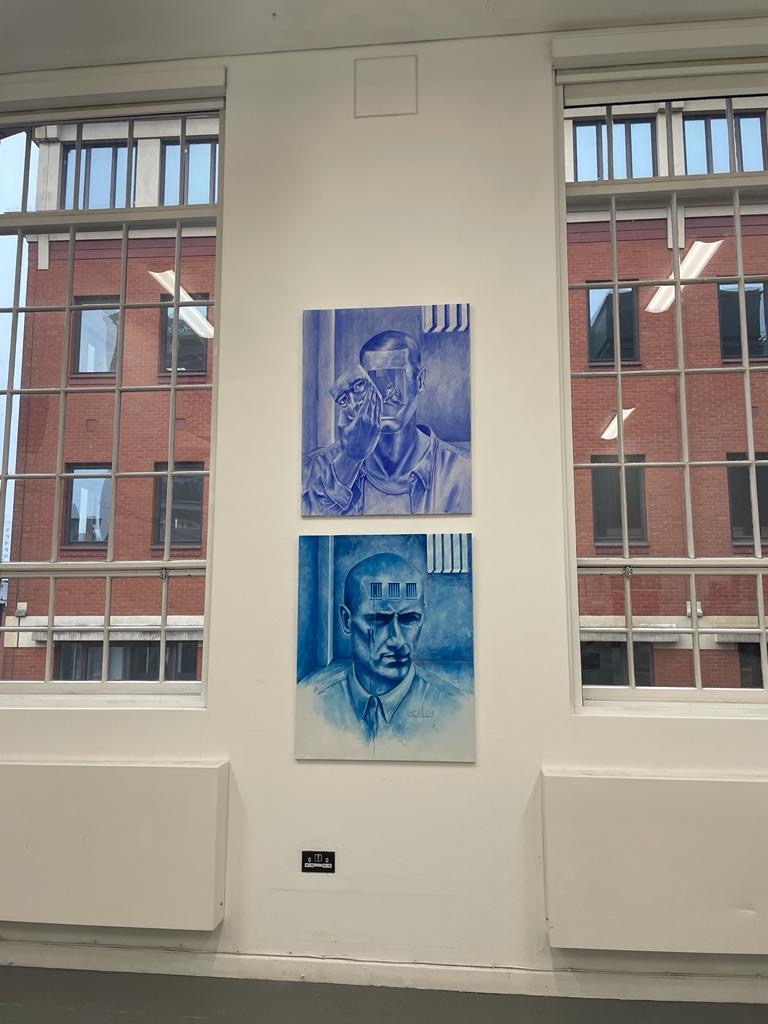
Here are a pair of earlier works. The image on the left gives an idea of the kind
of release an art practice can give to a serving prisoner, though there is a
tension present in works that suggest a longing for an eventual return to the
world outside prison. Interestingly Steel Door has depicted his own hands
making the artwork within the painting. Similarly, the second image is almost
fantastical in its depiction of the artist painting himself painting himself (a
practice known as mise en abyme, or colloquially, the ‘Droste Effect’). This
mimetic style – where a painter depicts themself painting, therefore
uncovering the artifice of the medium – is an interesting practice in painting,
incidentally seen in 17th century portraiture (there is an example by Artemisia
Gentileschi titled Self-portrait as La Pittura (or, ‘Self-portrait as the Picture’)). In
the second painting, Steel Door faces away from the picture plane, the
repeated figures perhaps implicating the viewer in the imagined escape
attempt, while also communicating the repeated actions of prison life.
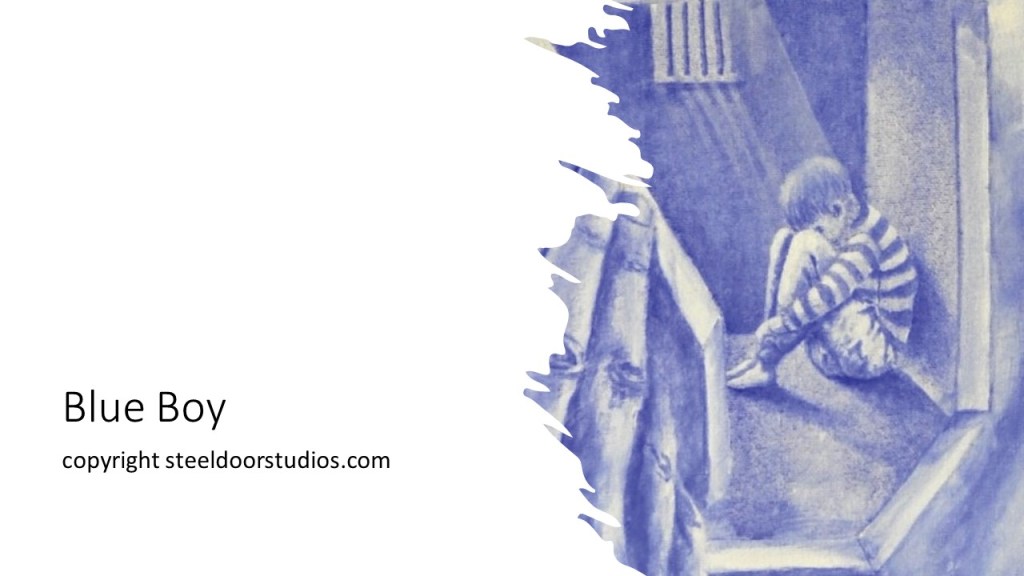
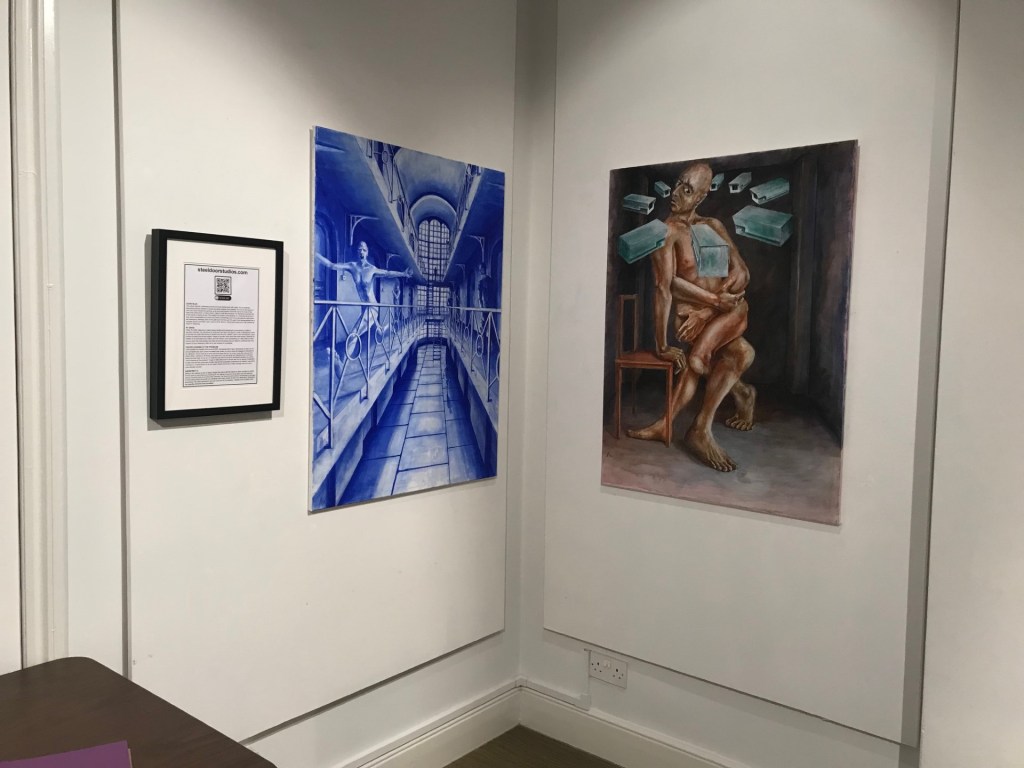
Another series of work titled Blue Boy, of which there are four paintings so far
– a fifth is currently being produced in Steel Door’s cell studio – are more
conventional, usually three-quarter length self-portraits. Steel Door is
profoundly colour blind, so he is more likely to use a palette of greens, purples
and blues, which, for him, are easier to differentiate on the canvas. Like much
of Steel Door’s work, the Blue Boy series mixes heavy metaphors around the
experience of long-term incarceration with autobiographical meaning. The
paintings convey a sense of damage, paranoia, surveillance and trauma. The
works therefore express a deep sense of vulnerability, but a vulnerability which
the artist has come to terms with and has agency over.
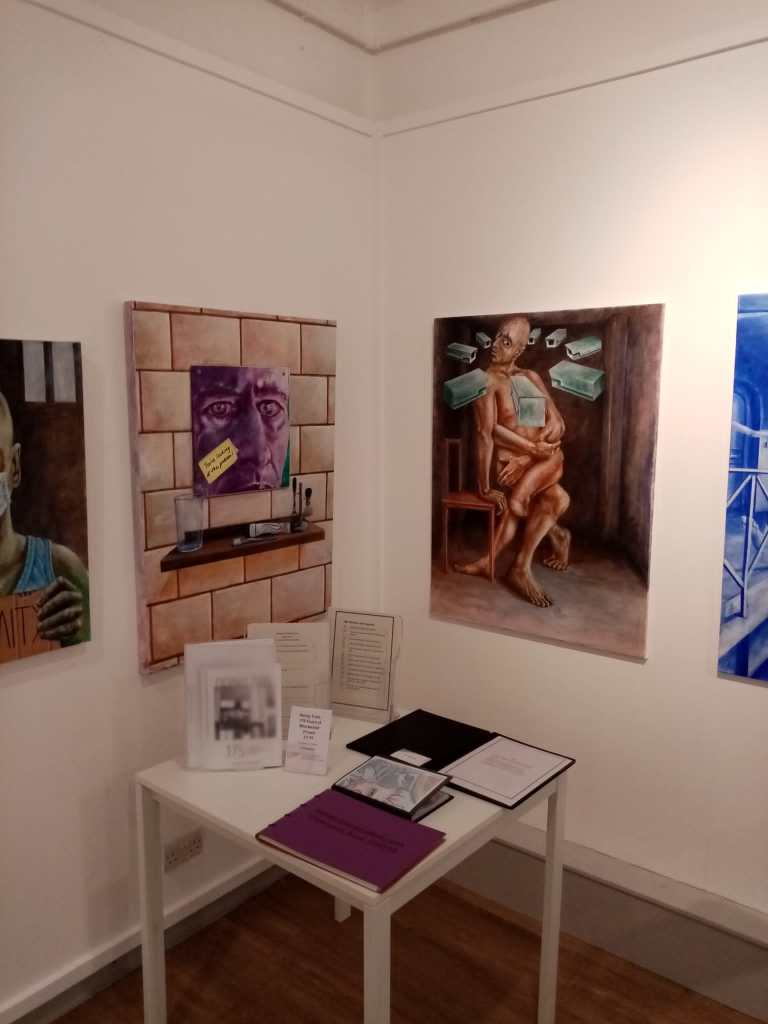
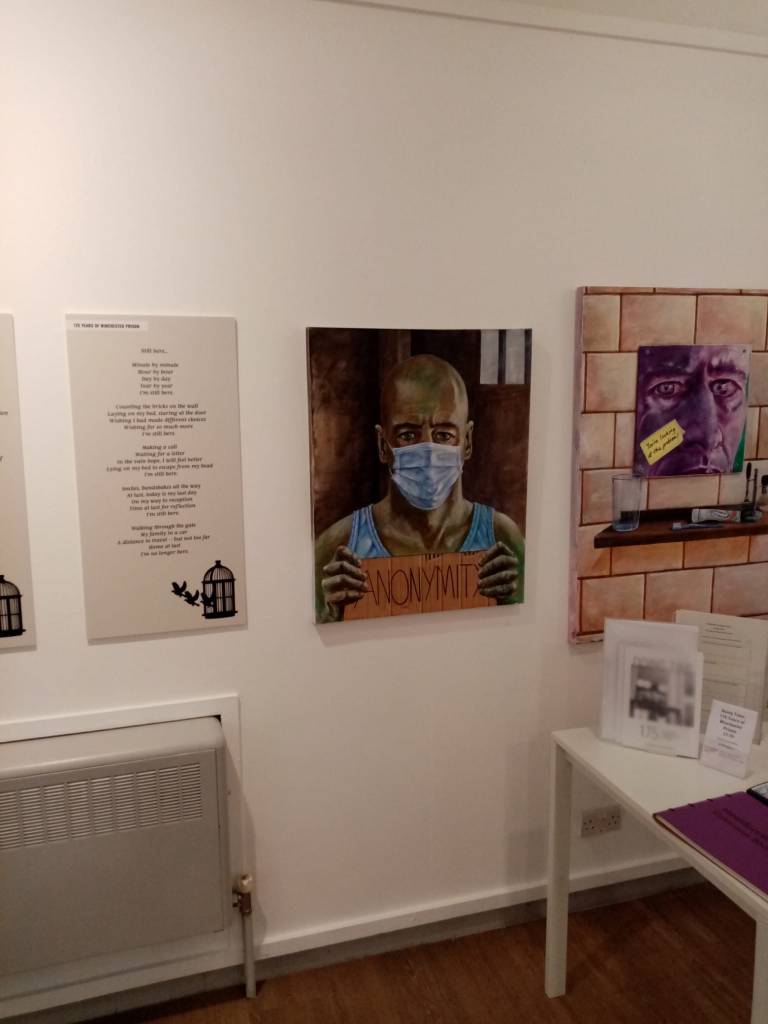
The final painting I’ll look at is titled You’re looking at the problem. Another
self-portrait, it depicts Steel Door in a prison bathroom mirror. The figure
seems disproportionately large, or the mirror too small – the face is boxed in
as per a prisoners’ experience of confinement. The text on the toothpaste
reads ‘Fortitude’, hinting at punishment long endured. Several of Steel Door’s
other paintings play with distorted perception in a similar way – in some self-
portraits the figure appears to have enlarged ears or eyes. This may be a
reference to ‘Alice in Wonderland Syndrome’, sometimes called ‘AWS’, which
is a rare condition which causes distorted perception and disorientation,
sometimes making an individual feel larger or smaller than they actually are.”
university of birmingham culture forward event

Coventry University
Exhibition with Justin Rollins

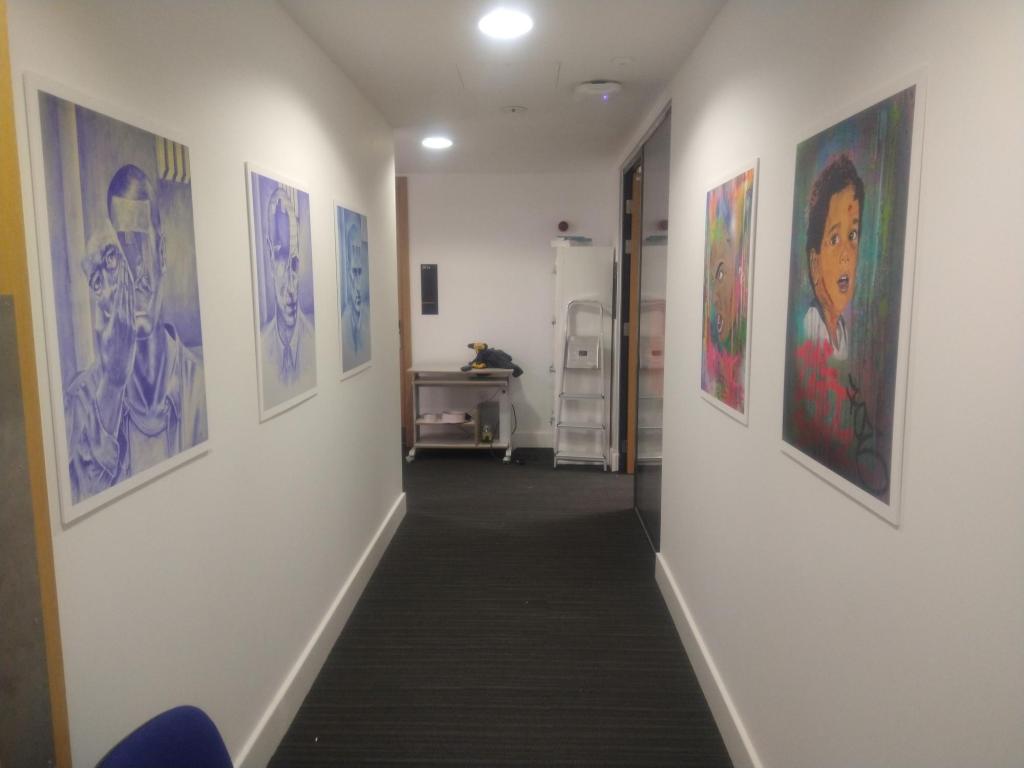





Ikon Gallery exhibition



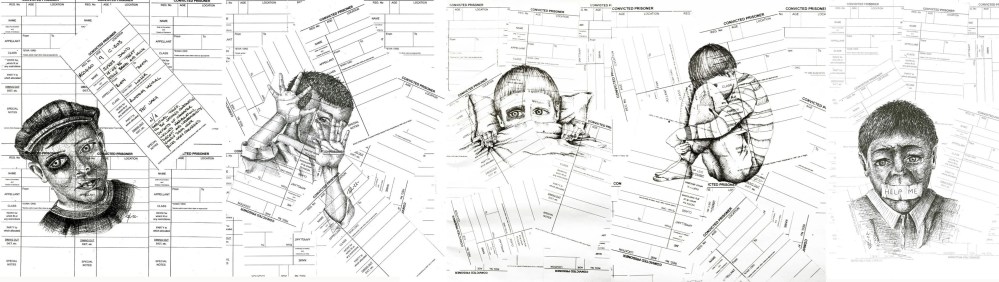
Description:
Damage done: 1-5
Ink on A3 paper (prison cell cards as background)
In Case of Emergency – Southbank Centre
Damage Done series was exhibited.

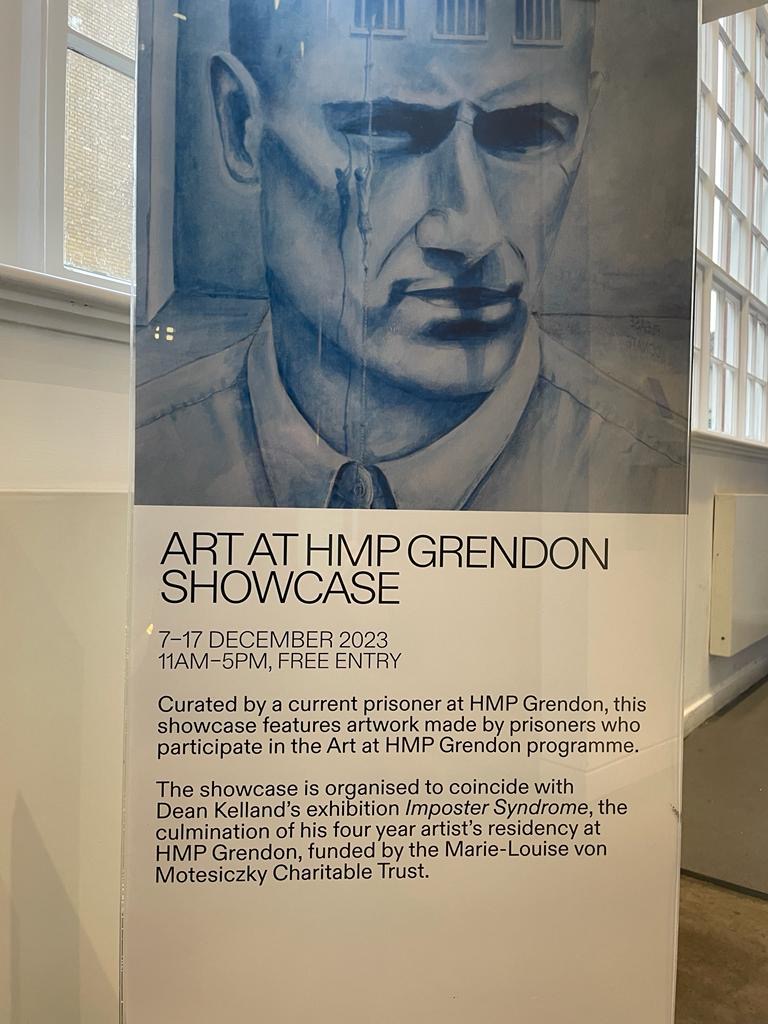
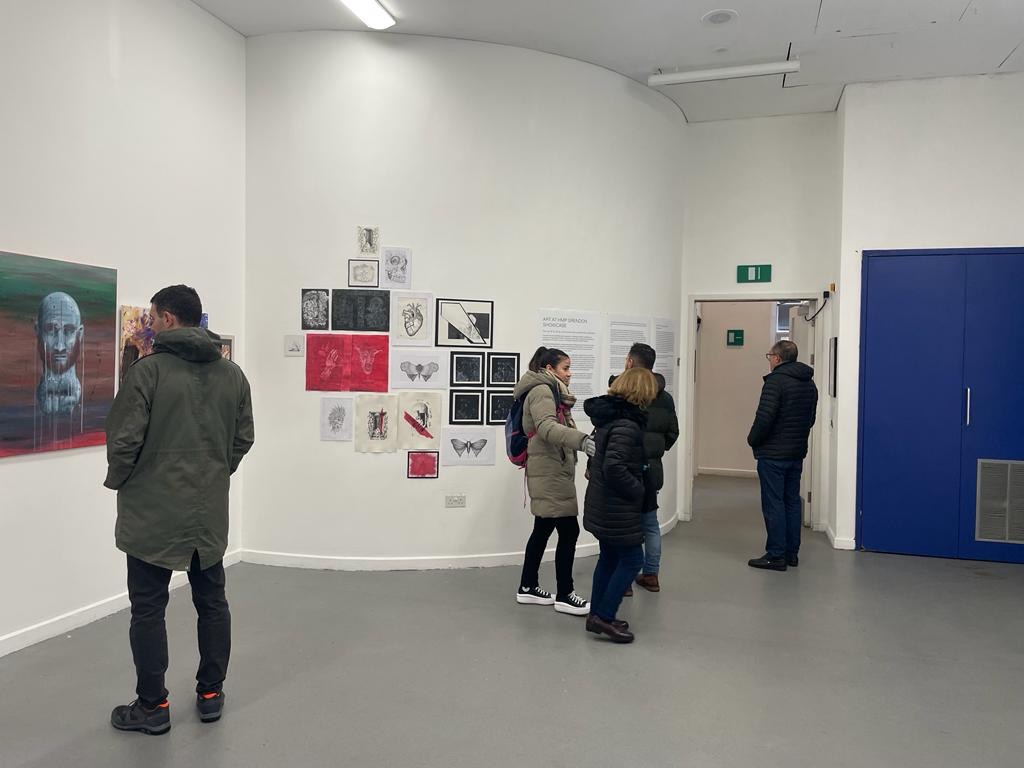
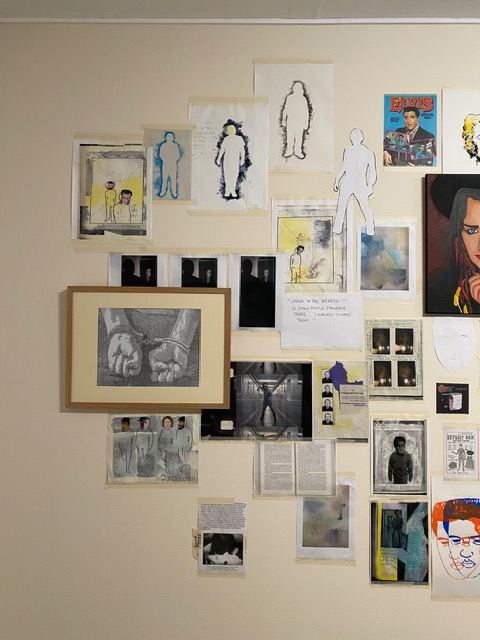
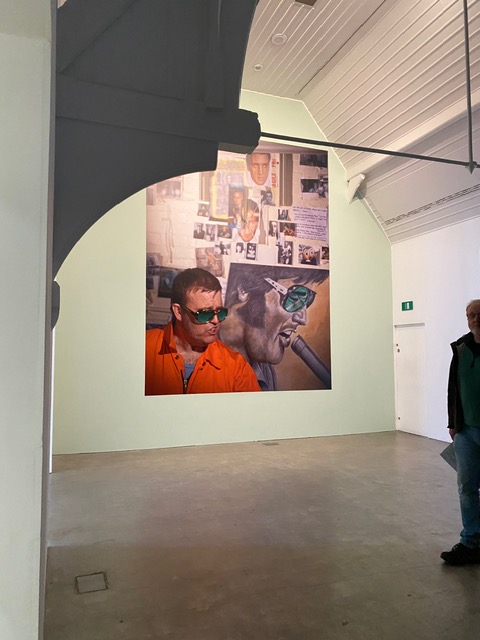
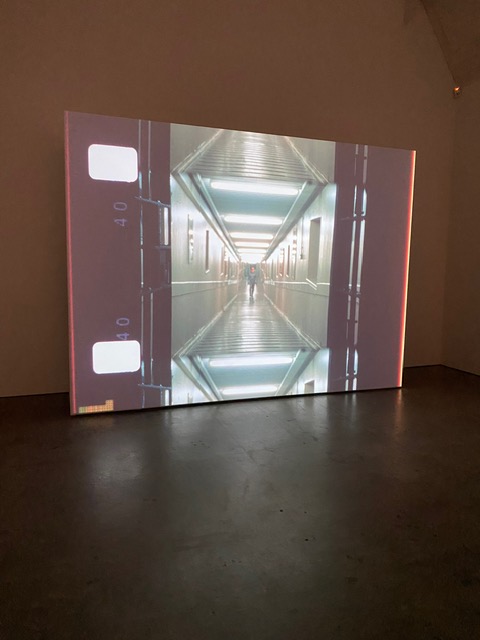
Dean Kelland Exhibition
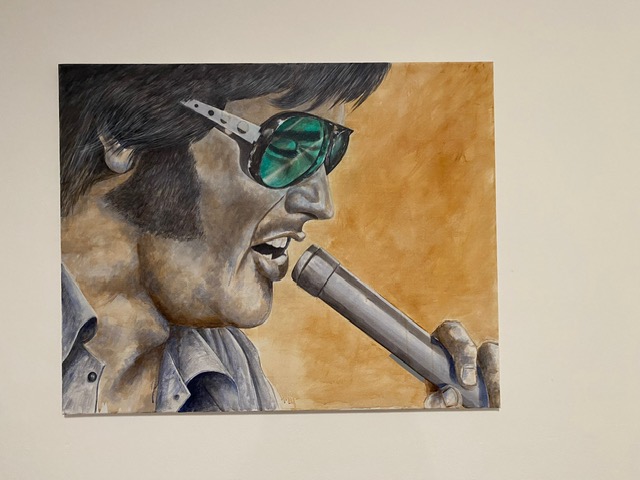
Elvis. Acrylic on canvas 1000x750mm
painted by steeldoorstudios for Dr Dean Kellands exhibition.
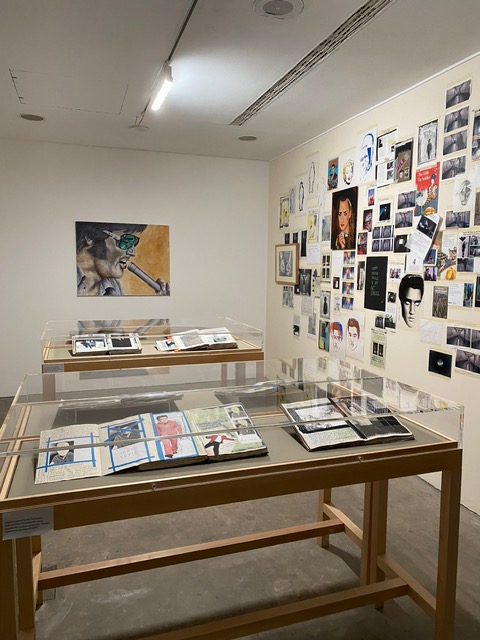





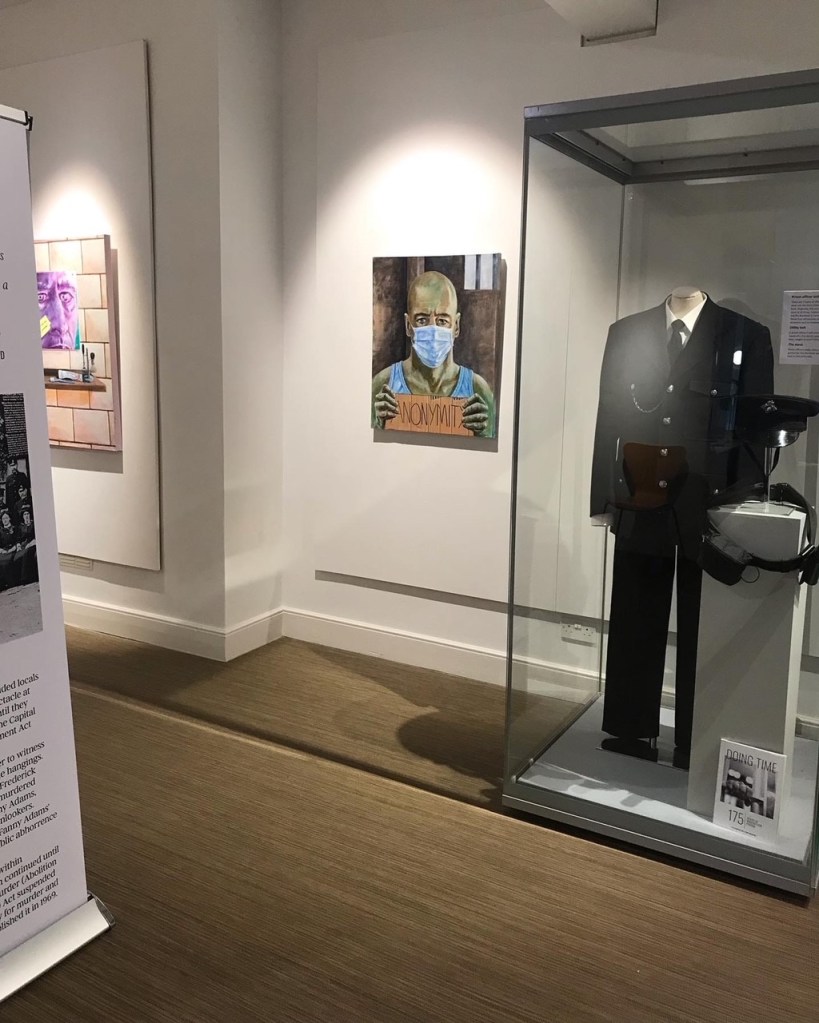
Doing Time Exhibition
Fareham



Winchester University


New Milton

 Steeldoorstudios